This article will discuss high-voltage batteries for the Toyota Prius Hybrid. Batteries for this vehicle are manufactured by PanasonicEV Energy (PEVE). They are nickel-metal hydride batteries. However, lithium-ion batteries are hot on their heels. Despite being more expensive, they will soon take over the market. They can be charged using a regular electrical outlet. These batteries can accelerate the car to 108 km/h (67 mph) four times without engaging the internal combustion engine.
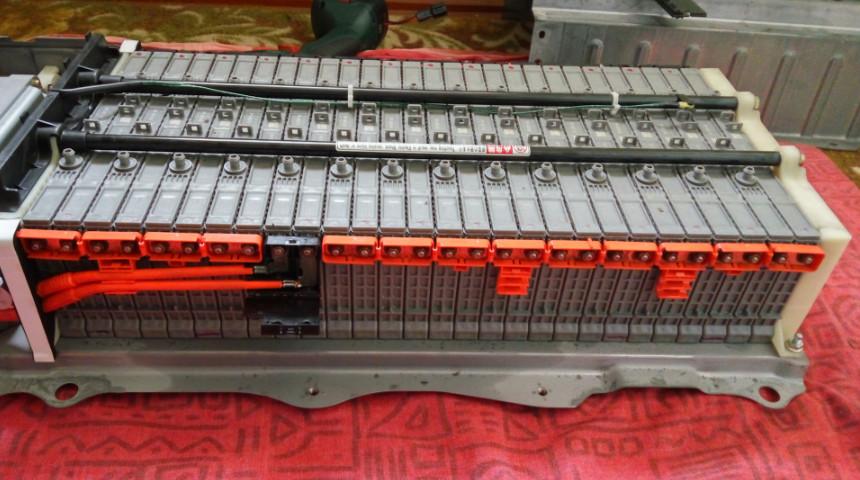
Composition and characteristics of a high-voltage battery
- 28 modules (7 with 1.2 volts).
- Power 500 V.
- A booster device has been implemented.
- Power increased by MG2 to 50 kilowatts.
- NiMH type.
- The current is 80 A maximum. When charging, it will be 50 A.
- Nominal capacity6.5 amps per hour. The car's devices use only 40% of the total capacity.
Such a car cannot be started without fuel, even if the high-voltage battery is fully charged. It only has 1 megajoule of energy. Many people try to make it to the gas station and ignore this rule. As a result, when the voltage drops below 3 volts, they die.
In the 20th body, to increase power, the number of high-voltage batteries was reduced to 168. This left only 28 modules. The converter increases the voltage to 500 volts. By increasing the nominal voltage of MG2 in the NHW-20 body, the power output could be increased to 50 kW. This was achieved without changing the dimensions.
Power is distributed by a special Power Split Device (PSD), essentially a planetary gear that serves as a transmission. Each gearbox may contain several such planetary gear sets. The rotation of the gears depends on the load. As the load changes, the frequency and direction change.
A high-voltage battery allows you to supply your car with energy and save on gasoline!