What is capacity?
Primary energy sources—batteries—and secondary energy sources—rechargeable batteries—are characterized by several key parameters that determine the duration and quality of their performance in technical devices. One of these defining parameters is capacity. This is a quantitative value that indicates how much electrical energy can be obtained from operating a cell under a discharge current for a certain period of time.
What is battery capacity measured in?
In the International System of Units (SI), the unit of measurement is the coulomb. 1 coulomb = 1 A*s—the amount of electrical energy at a current of 1 A for 1 second.
In practice, they use the non-systemic unit 1A*h = 3600 C, i.e. we have not capacity, but an electric charge or quantity of electricity.
How is battery capacity indicated?
In the calculations, the letter designation C was adopted. b, mAh. Physically, this means an electric charge at a current of 1 A for an hour.
How to calculate battery capacity?
(Determine, find out)
For calculation we use a simple formula:
C b = I n * t, where:
- C b – battery capacity, mAh;
- I n – load current, mA;
- t – operating time, h.
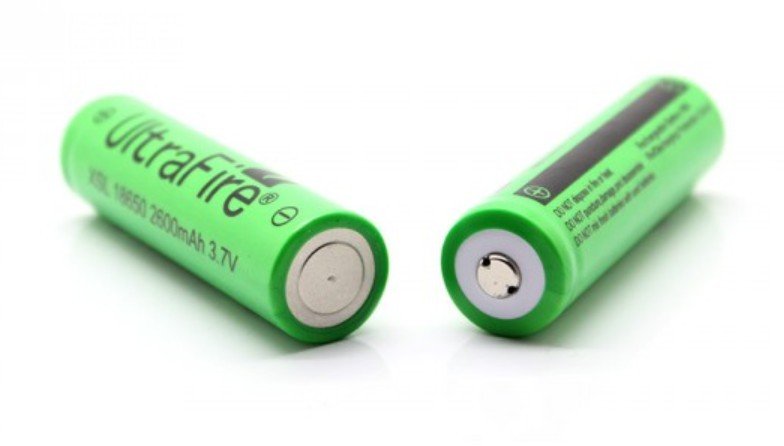
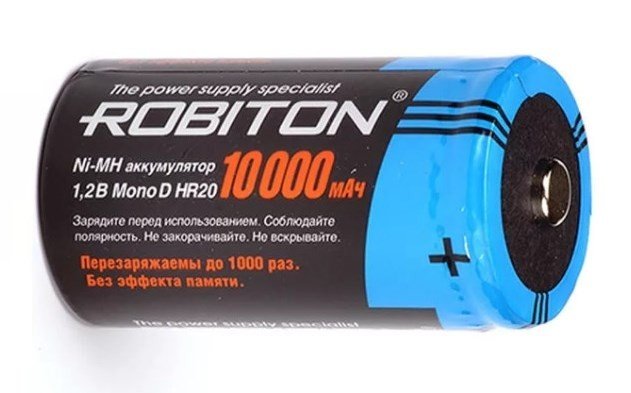
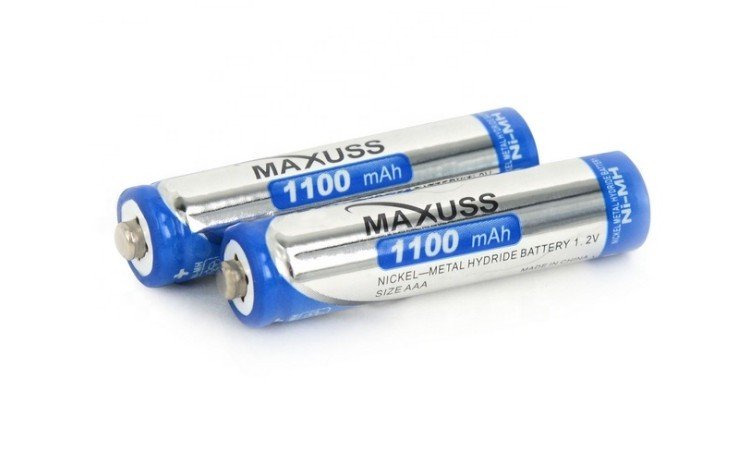
On secondary power sources, this value is indicated on the case or packaging as a numerical value. For example: 900 mAh or 550 mAh. The higher the value, the longer the device will operate with this power source between charges.
For primary power sources that are not rechargeable, this value is considered to be accepted:
| Designation (marking) | Battery type | C b, mAh |
| AA | R6, saline (1)LR6, alkaline (2)FR6, lithium (3) | 1100 - 3500 |
| AAA | R03, (1)LR03, (2)FR03, (3) | 540 - 1300 |
| B | LR12, (2) | 8350 |
| C | R14, (1)LR14, (2) | 3800 - 8000 |
| D | R20, (1)LR20, (2) | 8000 - 19500 |
| N | R1, (1)LR1, (2) | 1000 |
| 1/2AA | R14250, (1) | 250 |
| R10 | R10, (1) | 1800 |
The table clearly shows, The capacity of regular batteries isn't indicated on the casing or packaging, as is the case with rechargeable batteries. However, this figure is very important for determining the battery life of a device or appliance.
How to measure capacitance?
For example, you can use any battery or device—a cell phone would work well. Using a tester, measure the load current. Next, completely discharge the battery and charge it. Measure the time it takes to fully charge, calculating it using the formula:
C b = I n * t.
If the current consumption is 1.15 A or 1150 mA, the charging time is 3 hours, then we get the following:
C b = 1150*3 = 3450 mAh.
How to measure battery capacity with a multimeter?
The value of C b It's practically impossible to measure numerically with a multimeter. However, one indicator can be measured, in this case, the load current I n and substituting into the formula - I n * t, after charging the battery for a certain period of time - t, calculate the value of C b.
How to increase battery capacity?
To increase this value, you need to know what the battery capacity depends on:
- Element type - saline, alkaline or lithium.
- Operating temperature range - one battery (saline) are not designed for sub-zero temperatures, others (lithium) perform better in cold weather. Overheating also negatively impacts the performance of power supplies.
- The integrity of the element's housing - deformation negatively affects the chemical reaction inside the device, depressurization and electrolyte leakage makes it completely unusable.
There is a way, How to increase battery capacity For example, a battery. To do this, you need to "warm it up," i.e., discharge it completely and charge it again. Do this several times.
You can use a "folk" method, but it has no scientific evidence. Place the battery in the refrigerator freezer overnight. The C indicator b It will grow a little, but unfortunately, there won't be a significant increase.
If a device (tablet, phone) has the ability to turn on an economy mode or energy saving mode, then it can be turned on, thereby reducing the load, increasing the operating time, and, as it were, increasing the capacity of the power source.
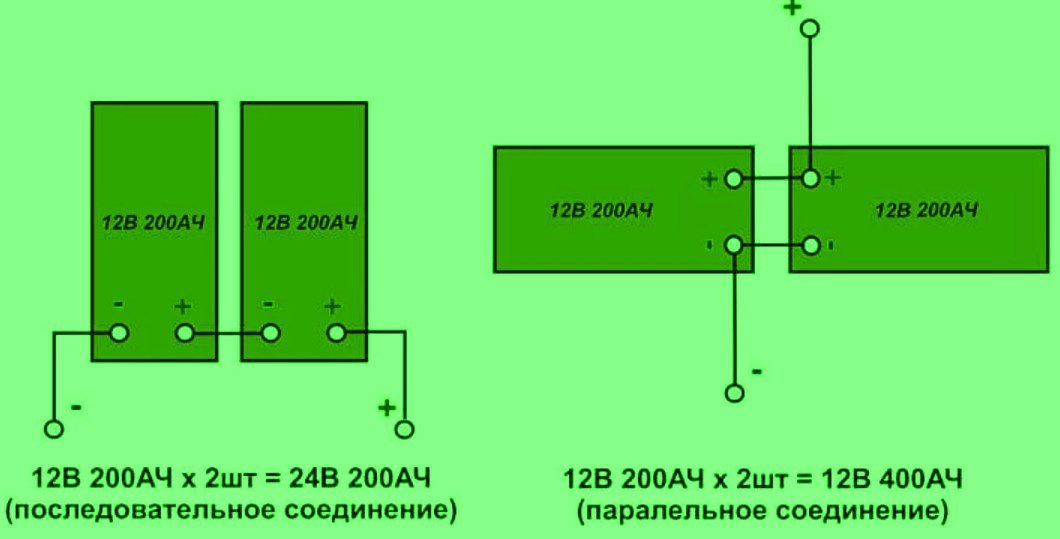
How to connect batteries to increase the total capacity?
To achieve the stated goal of increasing the technical characteristics of the power source during operation of a device or appliance, there are options for different connections of electrical circuit elements.
There are two methods or connection schemes:
- Series connection.
- Parallel connection.
The battery capacity will differ when connected in series and parallel. The first method will only increase the total voltage, while the second will increase the total C. b as many times as there are elements in the circuit:
C∑ = C1 + C2
Before starting the experiment, take two battery power sources with the same level of wear and charge, and two diodes. For a parallel connection, connect the negative terminals of the batteries together, and connect the positive terminals of one to the anode of one diode, and the positive terminal of the other to the anode of the other. The cathodes of the diodes should also be connected together. Connect the load with the negative terminal at the junction of the negative terminals of the elements, and the positive terminal at the junction of the diode cathodes. This connection scheme will increase C b twice as much. It's impossible to assemble such a circuit without diodes, because the batteries would discharge through each other.
Conclusions
- Battery capacity A key indicator of the quantity of electrical energy and its operating time, expressed as numerical values. It can be determined, calculated, and increased using various methods.
- Battery capacity (volume) may be different for both primary and secondary sources, but the latter can be recharged using chargers.
- Battery capacity The lifespan of a battery depends on the cell type, chemical reaction, environmental conditions, load current, shelf life, and operating method. If used incorrectly, it can quickly be damaged, but with proper care, its lifespan can be significantly extended.
- Batteries or rechargeable batteries manufactured by reputable manufacturers have generally proven themselves in the consumer market, guaranteeing the stated technical characteristics and high-quality, uninterrupted service in devices for a long time.