A battery is a power source in which the energy of a chemical reaction is converted into electrical energy during discharge, and vice versa during charging. Its main difference from a conventional battery is the ability to restore energy by recharging. To charge, a direct current must be applied in the direction opposite to the discharge.
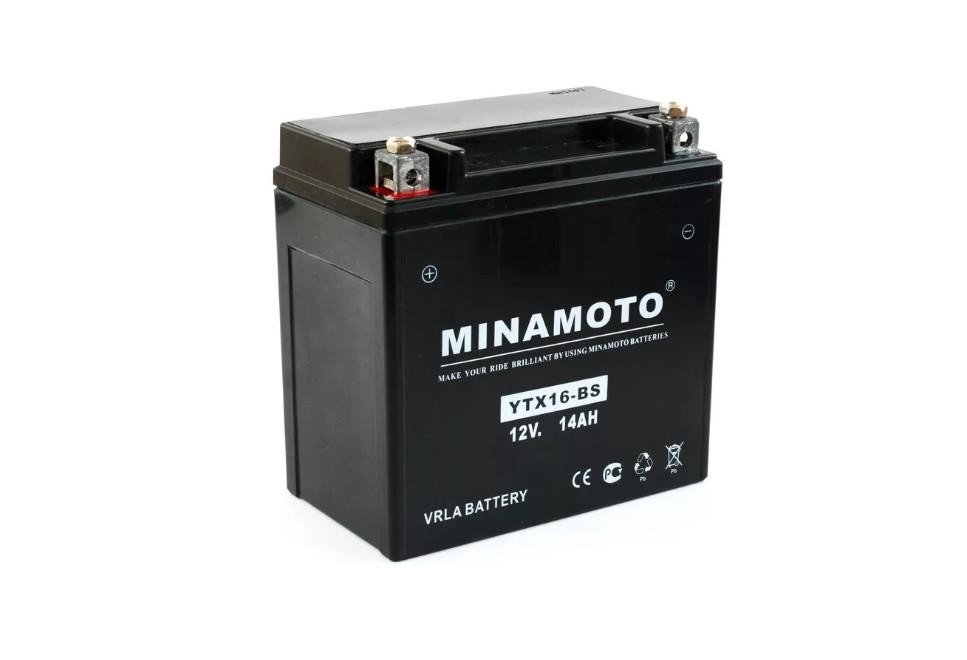
Lead-acid batteries were invented in the 19th century and remain the most popular batteries worldwide due to their low cost and high efficiency. The device consists of a housing and two electrodes of opposite polarity, immersed in an electrolyte—an acid solution—hence the name lead-acid batteries (AKB - Rechargeable Acid Batteries). Lead-acid batteries are also known as lead-acid batteries, due to the material the electrodes are made of.
How do they work?
The battery operates on the electrochemical process of lead and lead dioxide reacting in an aqueous sulfuric acid solution. When a load is applied to the electrodes, a chemical reaction occurs between the lead dioxide and sulfuric acid (H).2SO4, as well as the oxidation reaction of lead to lead sulfate. During discharge, lead dioxide is reduced at the cathode ("-"), and lead is oxidized at the anode ("+"). During charging, reverse chemical reactions and water electrolysis occur, releasing oxygen at the anode and hydrogen at the cathode.
The interaction reactions occurring in the battery can be described by two formulas:
- PbO2 + Pb + 2H2SO4 → 2PbSO4 + 2H2O — discharge.
- 2PbSO4 + 2H2O → PbO2 + Pb + 2H2SO4 — charge.
During discharge, the process of formation of lead sulfate occurs in the active masses of the anode and cathode, and the consumption of sulfuric acid H2SO4 and a decrease in the electrolyte density. During charging, reverse reactions occur, sulfuric acid forms, and the electrolyte density increases. The end of the charging process is characterized by the completion of the transformation of substances at the electrodes and the cessation of electrolyte changes. If charging continues, an undesirable water decomposition reaction (electrolysis) occurs, releasing oxygen and hydrogen bubbles in the electrolyte, resulting in the illusion of boiling. If this occurs, distilled water must be added to the battery to restore the electrolyte.
Design
Acid batteries have remained unchanged in their basic internal design for over a hundred years.
The design of the batteries includes:
- The electrodes are in the form of flat grids made of lead, with lead dioxide powder (PbO) pressed into the cells.2) on the anode, metallic lead powder (Pb) on the cathode.
- The separator is a porous dielectric that separates the electrodes from each other, preventing short circuits.
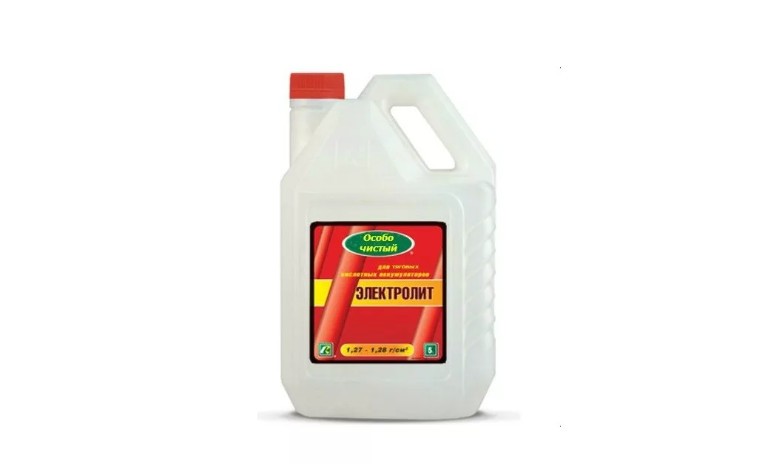
- Electrolyte is sulfuric acid diluted with water (distilled) H2SO4, electrodes and a separator are placed in it. Maximum electrical conductivity is achieved at a temperature of 20OC, the sulfuric acid concentration is 35%, which translates into an electrolyte density of 1.26 g/cm³. Internal resistance is minimal, and losses within the device are significantly reduced. In low-temperature climates, the solution density may increase to 1.29 g/cm³ - 1.31 g/cm³. Increasing the acid solution's concentration prevents the electrolyte from freezing, forming ice inside the casing, which could damage the electrodes and rupture the battery.
Main characteristics, parameters
- Capacity (nominal) - the amount of electrical energy that acid batteries can provide, the measurement occurs at the moment of discharge, under a load with a small consumption current, units of measurement - A*h.
- Starting current - shows the battery's ability to deliver high currents at a temperature of - 18OFor half a minute.
- Capacity (reserve) - shows the time period during which acid batteries deliver a current of 25 A up to a voltage of 10.5 V.
- The lower voltage value of a discharged battery is 1.75 - 1.8 V.
- Operating temperature range — — 40Ofrom - + 40OWITH.
Varieties
According to their operating mode, acid batteries can be divided into three groups:
- Cyclic mode—operating in a cycle of full discharge and full charge, periodically disconnecting the battery from the power source. Considered the most severe mode, the number of 100% discharge cycles is limited.
- Buffer mode is a widely used mode that is gentle on the battery; it does not allow for full discharge and is characterized by constant connection to a power source.
- Mixed - a combination of buffer and cyclic modes, but most of the operating time is spent in the buffer mode.
The most common lead-acid batteries available on the market can be divided into the following types:
| View | Service | Description | Voltage, V |
| Lead-Acid | Serviced | Car batteries come in the following types: low-antimony, antimony, acid-calcium, and hybrid. | 612 |
| AGM VRLA | Maintenance free | The separators are made of fiberglass, cyclic and buffer operating mode. | 24612 |
| VRLA | Maintenance free | Sealed housing, sometimes made of calcium, does not emit gases, used in buffer mode. | 24612 |
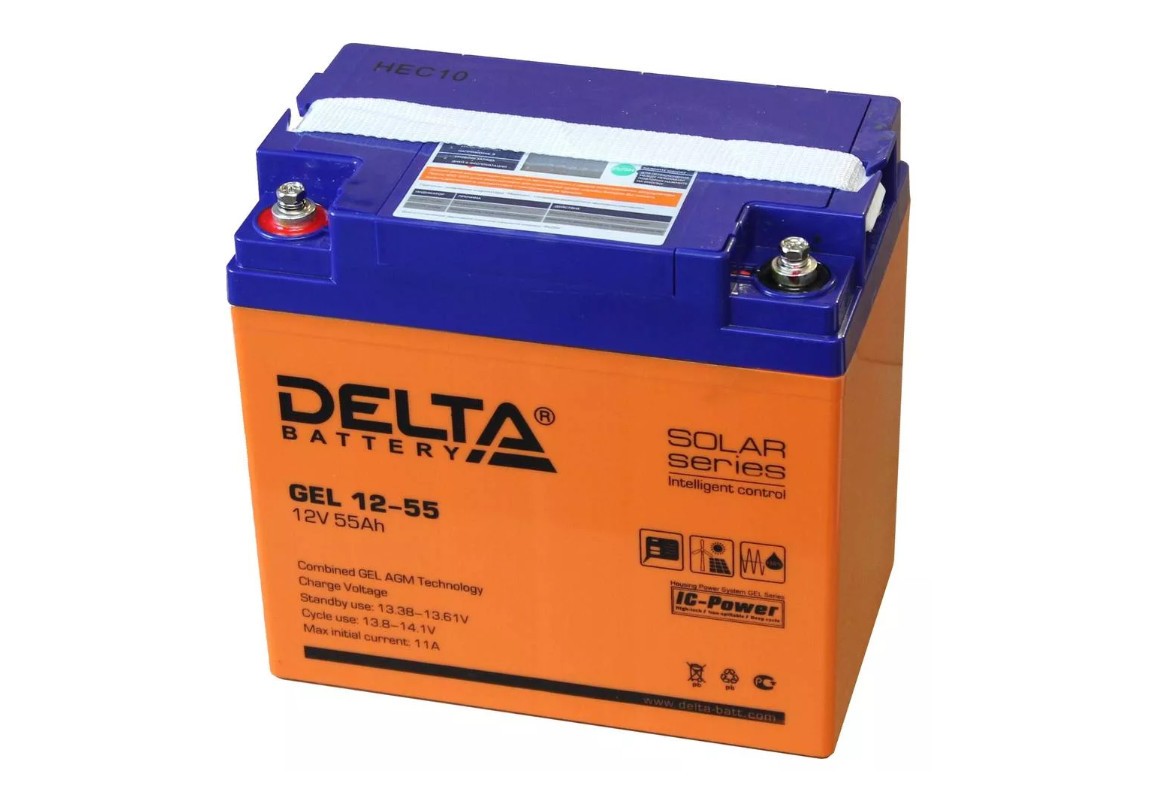
| GEL VLRA | Maintenance free | The electrolyte is silica gel, which extends the battery life, and the battery operates in a buffer mode. | 24612243648 |
| OPzV | Maintenance free | The electrodes are tubular in design, resistant to full discharge, and have a service life of approximately 22 years. | 2 |
Application
- Automotive - acid batteries are used as starter batteries.
- Computer equipment - uninterruptible power supplies (UPS) allow you to save information in the event of a power outage.
- Industrial production - acid batteries are used as backup power sources.
Charging and general recommendations
- Charging must be carried out at a temperature of 20OWITH.
- The charging current should not exceed 10% of the nominal capacity of the battery.
- For use in vehicles acid batteries At low temperatures, it is better to use it with an internal electric heating system, because capacitythe device's efficiency is lost by 1% when the temperature decreases by 1OWITH.
- It is not recommended to store acid batteries at temperatures above 30OWith, or discharged, the batteries must first be fully charged.
- It is better to store the battery in a cold place during winter, since the self-discharge process will be minimal, and it is necessary to apply grease to the positive terminal beforehand.
- Before use, acid batteries must be brought into a room with a temperature of 20OFrom 8-10 hours to bring into working condition.