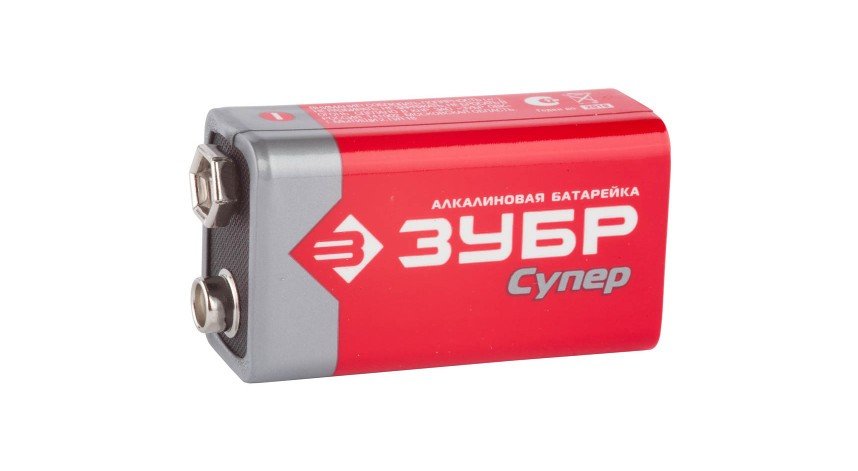
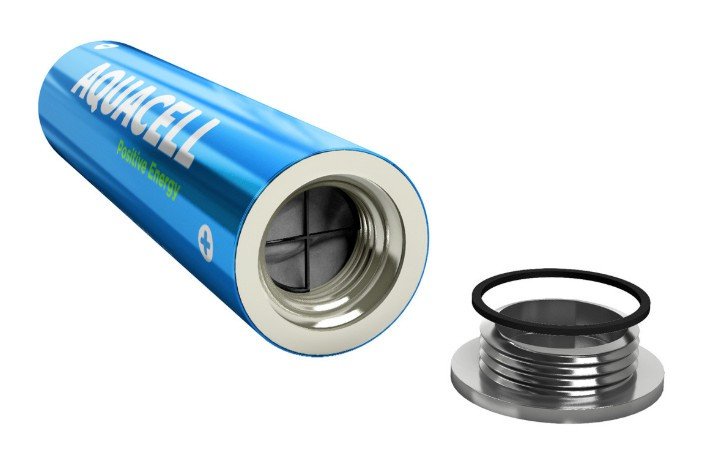
This power source is called a water battery because it is activated by H2A. To do this, unscrew the cap and drop it into a glass of water for 5 minutes. Then, a miracle will happen! It will produce the same voltage as a regular 1.5-volt battery.
What are the advantages of this device?
The main positive properties are as follows:
- It can sit unused for 20 years. If you place it in water after 19 years, it will activate and continue to work. Regular batteries lose their charge after just 2-5 years.
- Big capacityThis allows it to work for a long time.
- Can be recharged up to 5 times.
- Ideal for tourists, travelers and shift workers.
- Does not pollute the environment.
- Light weight, only 12 grams.
- Made of plastic.
The only downside to a water-powered battery is that it's quite expensive, around 500 rubles. It's cheaper if you buy it in bulk on AliExpress. Some stores sell it in sets of two for 800 rubles.
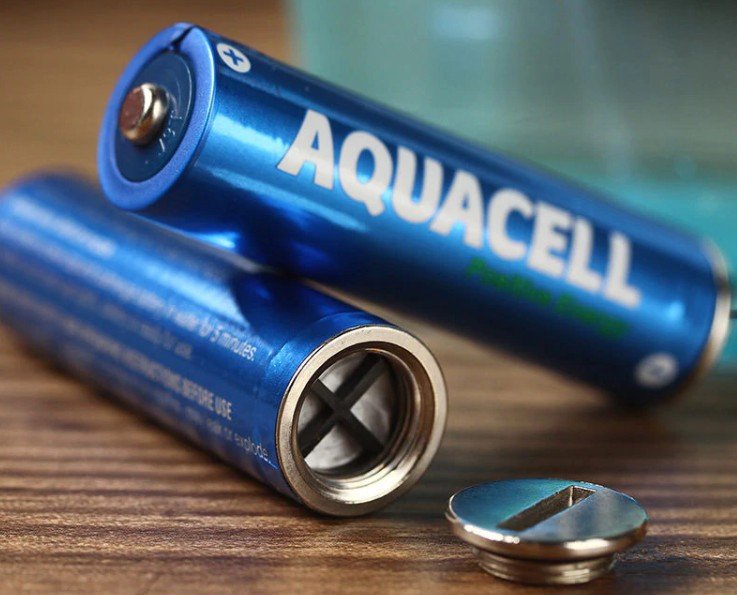
Water is also required for activation, but if you don't have any on hand, you can always have some in your mouth! So, refilling with water is hardly a disadvantage. A couple of drops and the element will work.
Charging algorithm:
- Unscrew the top cover.
- You pour water or simply drop the battery into a glass of water.
- Wait 5-7 minutes until the battery on the water is activated.
- Tighten the cap.
- Wipe the case clean of moisture.
- Place it in the device.
- Observe the operation of your device.
- Easy to use.
- Can operate at low temperatures.
Online reviews indicate that a standard keyboard can operate for more than 3 months on battery power.
Main characteristics of a water-powered battery
- Voltage 1.5 volts.
- Capacity 1000 mAh.
- Weight 12 grams.
- Current 30 – 750 mAh.
Currently, companies such as Aquacell and Nopopo are producing similar energy sources.
DIY Water Battery
If you don't want to spend your hard-earned money and have the time, you can easily make such a power supply yourself. It won't be a very compact energy storage device, though. If you think about it, you could make it the size of a AA battery.
A detailed video on how to make a water-powered battery.
For the energy source to work, we will need the following:
- Foil.
- A gasket. This can be a napkin, toilet paper, a dust cloth, or any other thin, water-permeable material.
- Water. You can add salt or citric acid to it.
- The rod is made of carbon or aluminum-magnesium alloy.
- Wires.
- Cylindrical plastic cup.
Step-by-step description of the process
Step #1.
We attach a wire to the carbon rod. It is screwed to one end.
Step #2.
We wrap the rod with filler, which is toilet paper. We wrap it with kitchen foil. You can use a cigarette wrapper, a beer can tin, or a thin sheet of aluminum instead. However, thin foil is best.
Step #3.
Next, we need to relieve the voltage from this foil. To do this, we attach a metal plate to it by tightly wrapping it around the rod. We then wrap the wire to the metal plate.
Step #4.
We wrap our entire rod with toilet paper, along with all the plates, and place it in a plastic cup.
After that, fill it with regular water. Ultimately, one water battery will produce 0.5-1 volts. But if you add citric acid to the solution, the voltage will skyrocket to 1.5 volts. It's best to make several such water batteries and connect them in series.