Cordless screwdrivers have recently become a part of our lives. Essentially, they're convenient tools that allow you to quickly tighten screws. They also allow you to complete any planned project much faster.
These devices are produced in two types:
- Mains powered.
- Battery operated.
The latter are the most convenient, but have a significant drawback: their short-lived battery. A cordless drill battery lasts about two hours, which is helpful if you have a second set. Otherwise, you have to charge the device and wait three to four hours.
- Battery characteristics for a screwdriver
- How much does a battery for a screwdriver cost?
- The design and types of batteries for screwdrivers
- Lithium-ion batteries
- Nickel cadmium batteries or Ni-Cd
- Nickel metal hydride Ni-Mh
- What is the design or what does a screwdriver battery consist of?
- Common faults with cordless drill batteries
- Repair and restoration of Ni─MH, Ni─Cd batteries
- Replacing Li─Ion, Ni─MH, Ni─Cd elements in a screwdriver battery
- Basic tools for replacement
Battery characteristics for a screwdriver
These power sources are manufactured to a single standard for almost all models. However, they do have slight design differences. Batteries are also differentiated by voltage and capacity. It's important to remember that the higher the capacity, the longer the battery can go without charging.
Cordless screwdriver batteries are typically shaped like large rectangles, but round models are also available, such as those from Bosch. These tools are the most convenient, and their handles don't feel too bulky.
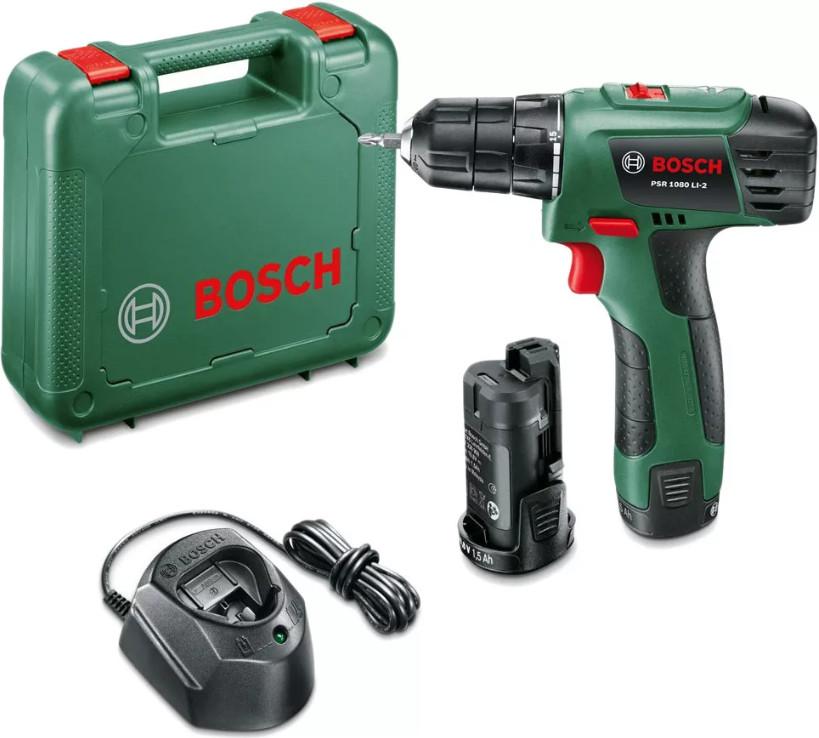
Moreover, it doesn’t get in the way and you can get into the most inaccessible places.
Main parameters:
- Voltage 9.6 - 12 - 14.4 volts.
- Capacity from 1200 mAh and above.
- Country of origin: China, Russia, Japan, USA.
- Color: black.
- Type Nickel cadmium.
- Number of charging cycles – 500 times.
- Shape: rectangular, oval.
How much does a battery for a screwdriver cost?
The average price is around 1,500 rubles. The price depends on the battery capacity, manufacturer, size, and type. Every cordless drill, be it a Bosch, Mikita, or Interskol, requires its own power source.
The design and types of batteries for screwdrivers
Each manufacturer produces batteries that are similar to each other. Below is a photo of one such device.
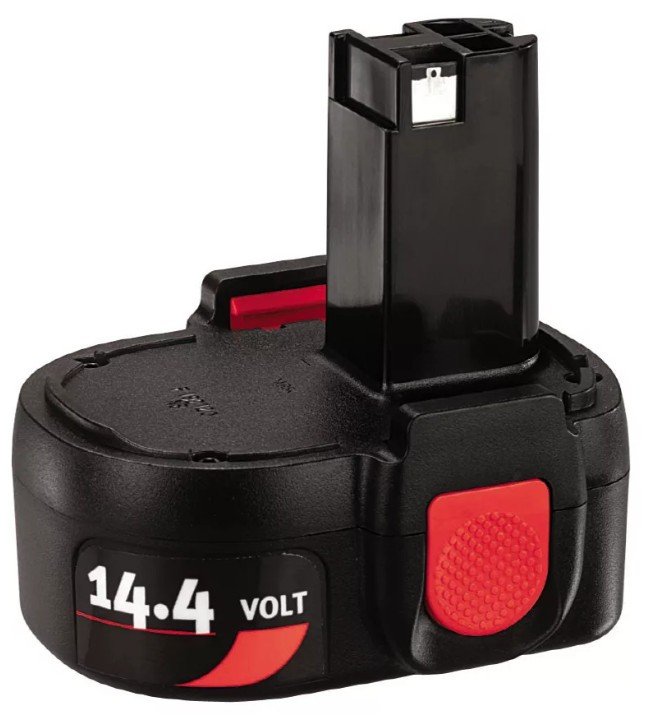
You can open the battery with a Phillips screwdriver by unscrewing just four bolts. However, depending on the design, the number of bolts may vary. Once you disassemble the battery, you'll see a picture of the power elements connected in series.
Important to know! One screw is covered with plastic or has a sticker on it. Removing it will void the warranty.
The final voltage is derived from small batteries, resulting in an output of 14.4 volts or more, depending on the battery type.
Ni-Cd batteries are the most common power source for screwdrivers, but others are available. Below is a complete list of commonly used batteries.
Lithium-ion batteries
The nominal voltage of these power sources is 3.6 volts. They are quite rare batteries for screwdrivers. Their main advantages are the absence of self-discharge and memory effect. capacitySeveral times higher than all other batteries. As a result, such a battery will contain fewer cylindrical current sources. This reduces the weight and dimensions of the design. The only drawback of such batteries is their high cost.
The same Ni-Cd batteries will cost 3 times less. After 3 years, the lithium contained in the power source will decompose significantly and capacityThe battery life will decrease significantly. However, this isn't a major drawback. Charging time is approximately 1 hour. They cannot be charged above 4.35 V or discharged to 2.5-2.7 V. Failure to comply with these requirements can damage the screwdriver battery.
To ensure maximum protection, Li-ion batteries are equipped with a special controller. It is impossible to create a 12-volt battery from this type of battery. The voltage of a single cell fluctuates during operation. The charger included with the screwdriver is universal and can therefore be used to charge other batteries.
Nickel cadmium batteries or Ni-Cd
The voltage of a single power cell is 1.2 V. This type is the most common. They operate in sub-zero temperatures, can be easily stored when discharged, and are inexpensive. Despite their advantages, they also have disadvantages. Cadmium is highly toxic and difficult to recycle.
Batteries made on its basis have a strong self-discharge, have a memory effect, a low level of charge/discharge cycles and a small capacityDue to their toxicity, these types of batteries for screwdrivers are currently not produced. These batteries have a voltage of 1.5-9 volts, while rechargeable batteries have a maximum voltage of 36 volts.
Nickel metal hydride Ni-Mh
Voltage 1.2 volts. Quite rare. In fact, these are environmentally friendly elements with a slight memory effect. They do not contain harmful components and capacityQuite high. Disadvantages: overpriced, poor performance in cold weather. If Ni-MH batteries are stored in a discharged state for an extended period, their performance will significantly decrease.
What is the design or what does a screwdriver battery consist of?
The device consists of simple components. The Bosch PSR 14.4-volt model has four copper contacts.
- Positive conclusion.
- Negative.
- A contact leading to a temperature sensor, a thermistor. It's needed to turn off charging once the battery is charged. Sometimes it acts as a limiter. When the battery gets hot, this element will cut off the current. Heating is especially common during fast charging.
- A service contact connected via a resistor. It is used to equalize the charge on batteries. It is used exclusively in complex charging circuits.
The screwdriver is recharged from a 220 volt network!
Common faults with cordless drill batteries
When a Ni-Cd battery fails, it most likely means that one of its cells has failed. This means it's important to determine which internal battery is faulty. To find out, you'll need to use a multimeter and measure the voltage of each battery cell.
Lithium-ion batteries will produce 3.6 to 3.8 volts, while the rest will produce 1.2-1.4 V.
What is required of you?
- Perform a full charge.
- Disassemble the case.
- Measure all the batteries and determine which one is the lowest, i.e., below the rated capacity. This parameter should be printed on the battery case. Batteries are usually wrapped in paper.
- After this, apply a load to the battery by turning on the screwdriver. To save time on assembly, simply connect a light bulb to the contacts of the 12-volt battery.
- After some time, re-measure the current storage batteries. Batteries whose voltage has dropped by 0.5-0.7 volts can be restored or replaced. Especially those batteries with leaks and rust should be removed.
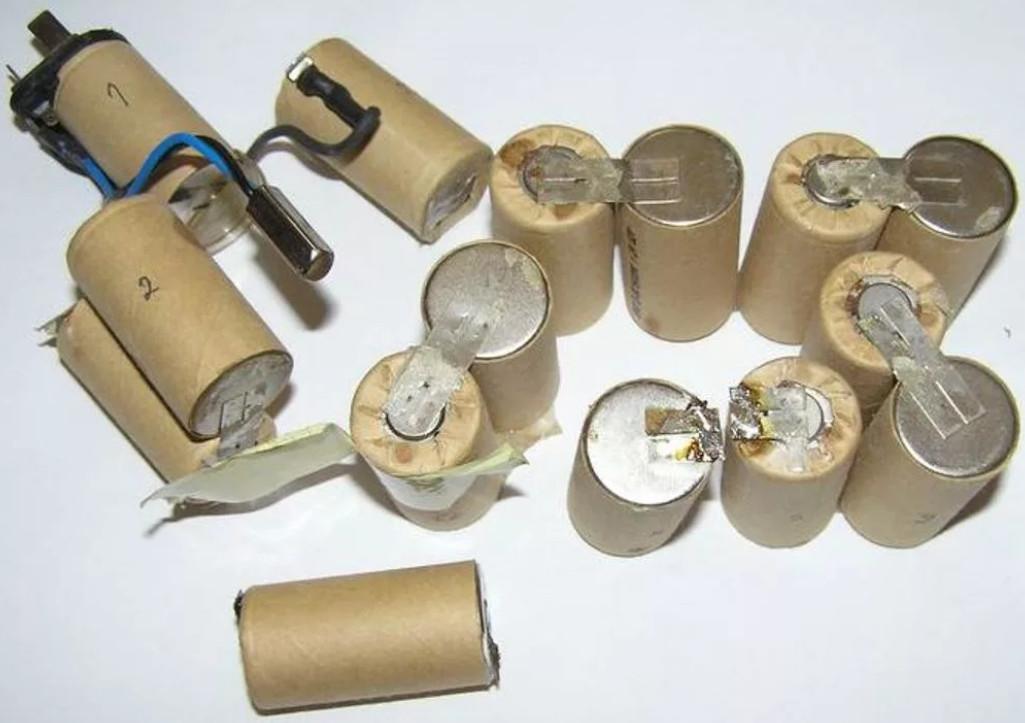
After all this, certain work needs to be done on faulty batteries. This will be discussed below.
There are also some less serious malfunctions, such as faulty soldering at the battery contacts or a broken temperature sensor. These malfunctions are extremely rare and therefore will not be discussed further.
Repair and restoration of Ni─MH, Ni─Cd batteries
Lithium-ion batteries cannot be repaired. Their energy is generated by the breakdown of lithium. After three years, this process is complete, and there is nothing left to restore. Eventually, you'll need to buy a new battery.
Nickel cadmium and nickel metal hydride batteries can be cured by applying short pulses of current to them.
Make sure that the current is several times greater than capacityNi-Cd batteries. The battery's dendrites are destroyed, and a reset occurs. After this, it needs to be trained by performing several charge and discharge cycles.
This method often fails, and the batteries stop working. This is because the electrolyte level in the batteries decreases as they operate. Therefore, electrolyte must be added to the cell.
Replacing Li─Ion, Ni─MH, Ni─Cd elements in a screwdriver battery
After the reconditioning procedure, the battery should be soldered back into place. However, if you decide to buy a new one instead of replacing it, you should visit a specialist store.
Typically, a single 1.2-volt, 2000 mAh battery costs around 200 rubles or a little more. But in any case, soldering is unavoidable.
Basic tools for replacement
- Nippers.
- Soldering iron rated for 25-30 watts or higher.
- Soldering acid or rosin.
First, you need to desolder or cut off the power source from the special plate. Then, replace or repair it. After that, solder the working element to the plate to connect everything into a garland. Solder quickly to prevent damage to the internal structure of the power source from high temperatures. Ideally, you should save all the plates and solder the batteries to them. If this isn't possible, you should replace them with copper ones of the correct cross-section. This is actually very important, as an incorrect cross-section can cause overheating, which will eventually trigger the thermistor.
Solder the power sources according to polarity. Once the assembly is complete, charge it. Next, measure the voltage of all the components. When charging is complete, the voltage across each cell should be approximately 1.3 volts.
Next, discharge the battery by connecting a light bulb or using a screwdriver. Ideally, this process should be performed once every three months. This is necessary to erase the memory. nickel-cadmium batteries.