Hydrogen batteries have long been used in scientists' test vehicles. And recently, the idea of using them in everyday household appliances arose. Researchers decided to extract energy from a beam of protons.
In a standard hydrogen battery, water is split into hydrogen and oxygen. The hydrogen is placed in a fuel cell, where it begins pumping energy through a chemical reaction. A proton-based cell, however, works quite differently.
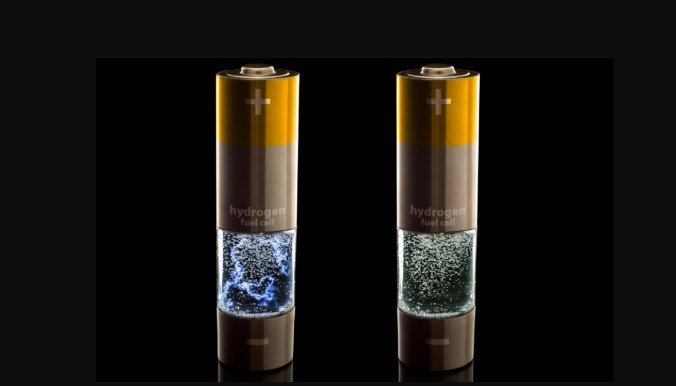
Scientists from Austria used metal electrodes. They ended up creating a reversible proton exchange membrane. As a result, they learned to avoid the gas phase. They use hydrogen in its solid state.
The operating principle of a hydrogen battery
During recharging, protons—hydrogen ions—emanating from the proton exchange membrane combine with electrons from one of the electrodes. This initiates energy storage, just like in a conventional battery. When discharging, the protons combine with oxygen, releasing electrons that generate the required current.
According to calculations, the energy efficiency of a hydrogen battery is similar to that of a lithium-ion battery. However, the energy density of a hydrogen battery is significantly higher. This suggests that a proton-powered battery can be manufactured in a miniature package. The cost of this new technology, by all estimates, will be lower than that of lithium-ion batteries.