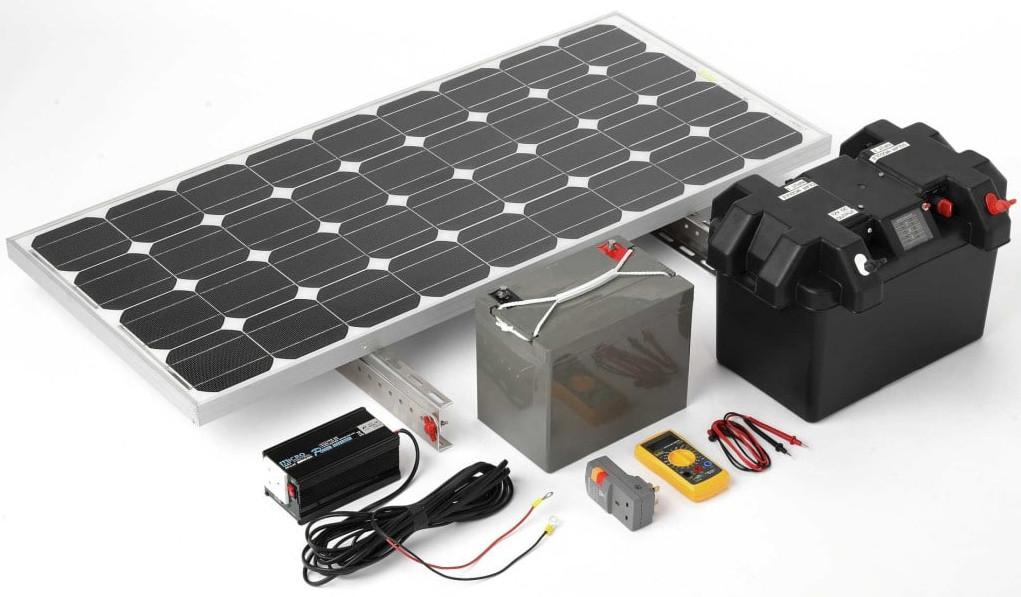
Solar power systems have recently become a popular choice for many people. To increase their efficiency, additional equipment is required. A solar tracker could be one such device.
This device is a rotating mechanism. It allows you to track the movement of the sun. The solar module will ultimately rotate in the direction the sun moves.
Advantages of solar tracker
Below are the main positive qualities of such an installation.
- Allows to increase the efficiency of the entire power plant.
- Efficiency increases by 45%. It increases especially when the rays fall on the solar cells at an angle of 90 degrees.
- The level of energy received increases.
How does a solar tracker work?
To track a luminary, a device must be able to:
- Move the panel with batteries to the place where the light flux is maximum.
- Find where the sun is relative to the solar module.
Specialized electronic equipment, including a GPS unit, monitors the sun's position. This device allows you to calculate the sun's position. It also allows you to find out what time it is.
All the work is done using GPS. The satellite receives the necessary signal, and the solar panel swivels to follow the sun.
The solar tracker is equipped with servo motors, which allow it to vary the shaft's rotation. The rotating device is available in four variants.
Types of solar panel trackers
Exists with 1 axis of rotationIt is capable of orienting itself from north to south. They are divided into subtypes:
- The axis is tilted. The rotation axis is located between the horizontal and vertical axes relative to the surface.
- The axis rotates horizontally.
- With a polar-oriented axis. Orients toward the North Star. The angle is individually adjusted for each specific application.
- The axis has a vertical orientation and is located vertically relative to the surface.
Solar panel stand with 2 rotation axes and one supporting plane.
With 2 torsion axes having 2 degrees of freedom. They operate independently of each other but are fixed into a single unit. As a result, the solar panels move according to the parameters. They have several subtypes:
- With two rotating axes and a supporting surface. Photovoltaic modules are fixed to a surface mounted on a circular platform. This can resemble a rail. This allows for the attachment of more modules. The main disadvantage is the large installation area.
- A two-axis tracker, but mounted on a supporting pole. The solar panels are mounted on a special pole. A platform is placed on top of the pole to which the rotation mechanism is attached. The second level of freedom is implemented as with single-axis trackers.
How to make a solar panel rotating device yourself?
To do this, you will need to prepare the necessary parts:
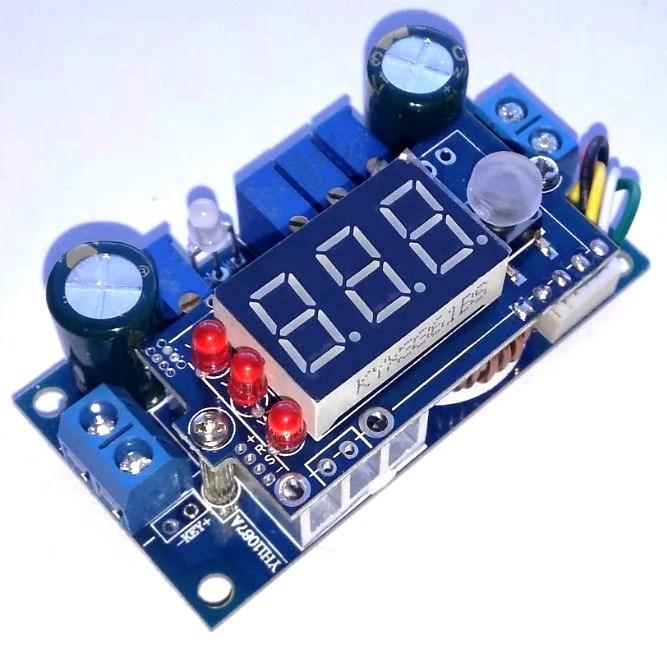
- An electronic device for monitoring the operation of the tracker.
- A frame for installation. It is usually made of metal.
- A device for converting energy so that turning motors are powered by photocells.
- Means of protecting solar modules from bad weather.
- Mechanisms that rotate the frame and control the process.
How to make a tracker yourself
- Purchase a metal profile and use it to create a retaining frame. Select the profile cross-section by eye. The parameters of this installation depend on how much solar panels It will be installed on it. This part determines the tracker's design. This means that at this stage, the number of movable axes and their spatial arrangement are determined. Implementing this design requires experience with welding and power tools.
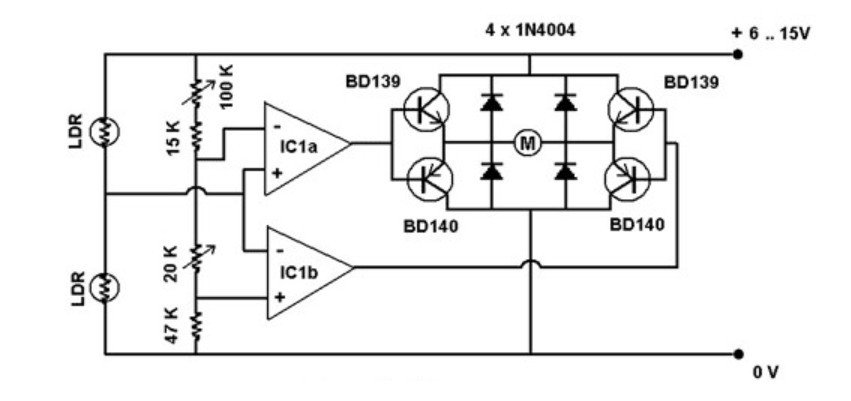
- To rotate the tracker horizontally, a sulfide motor is used. This motor allows for rotation in various directions. To control this device, you need to build a special electrical device. This remote control is based on photoresistors. The schematic can be found online. However, it's best to purchase a ready-made device.
- To make the installation rotate around a vertical axis, you can connect a clock mechanism to it. To do this, solder electrical contacts to the clock hand (moving contact) and to the hour markers on the dial (fixed contact). By creating one such contact, for example, at 12 o'clock on the dial, the motor will start once per hour. By making another non-moving contact at 6 o'clock, the motor will start every 30 minutes. The motor operates as follows: the longest hand rotates and passes 12 o'clock, the contacts engage, the motor drive control circuit closes, and the motor rotates the panel. To rotate around the horizontal axis, you can use the principle of a water clock. In this case, solar panels The solar module is positioned horizontally. A weight, such as a brick or something similar, is attached to one end of the module. A water canister of the same weight as the bricks is placed on the other end. Holes are made in the water canister. This causes the water to flow out, and the solar module rotates due to the change in mass. The diameter of the holes in the canister and their number are determined by eye. This requires experimentation.
- Any suitable material can be used to protect against precipitation.
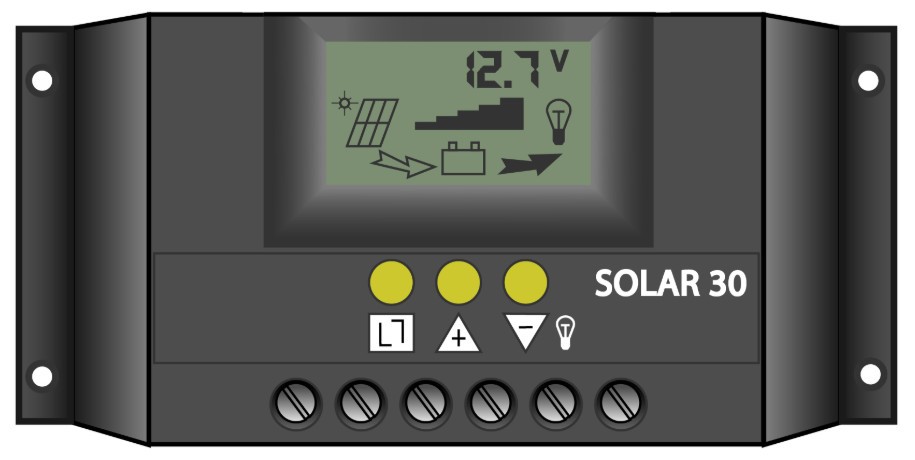
- To automatically control the system, you'll need to create a special device. However, it's best to purchase one from a store.
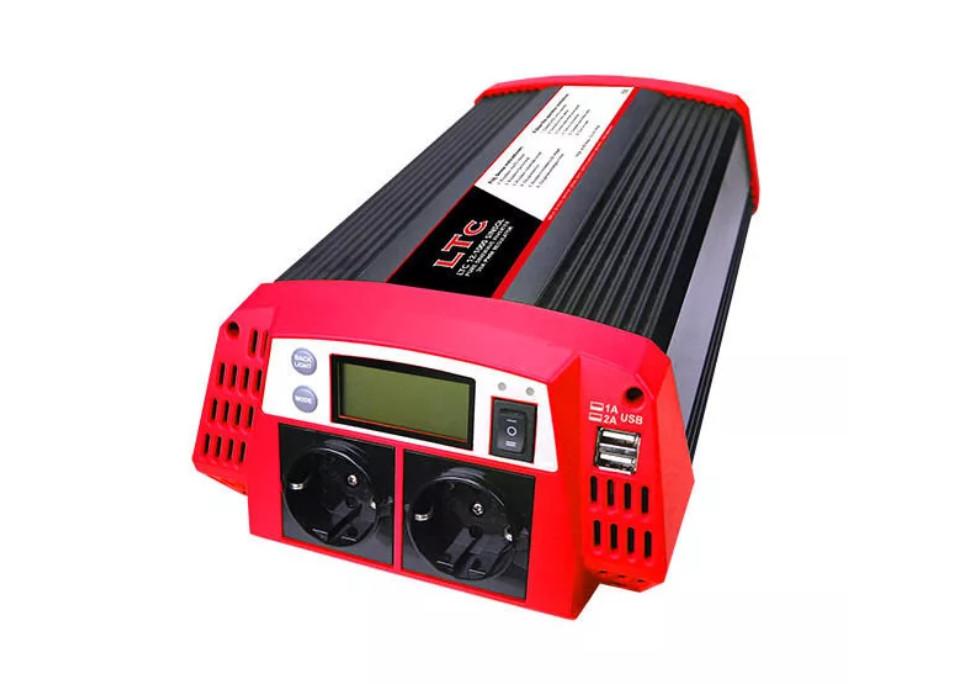
- The system is connected to an inverter. This is necessary to convert direct current to alternating current. If you have some knowledge of radio engineering, you can easily build it yourself.
This is how a solar panel tracker is created. We hope this information was helpful!